The Monster as a Mirror of the "Ego"
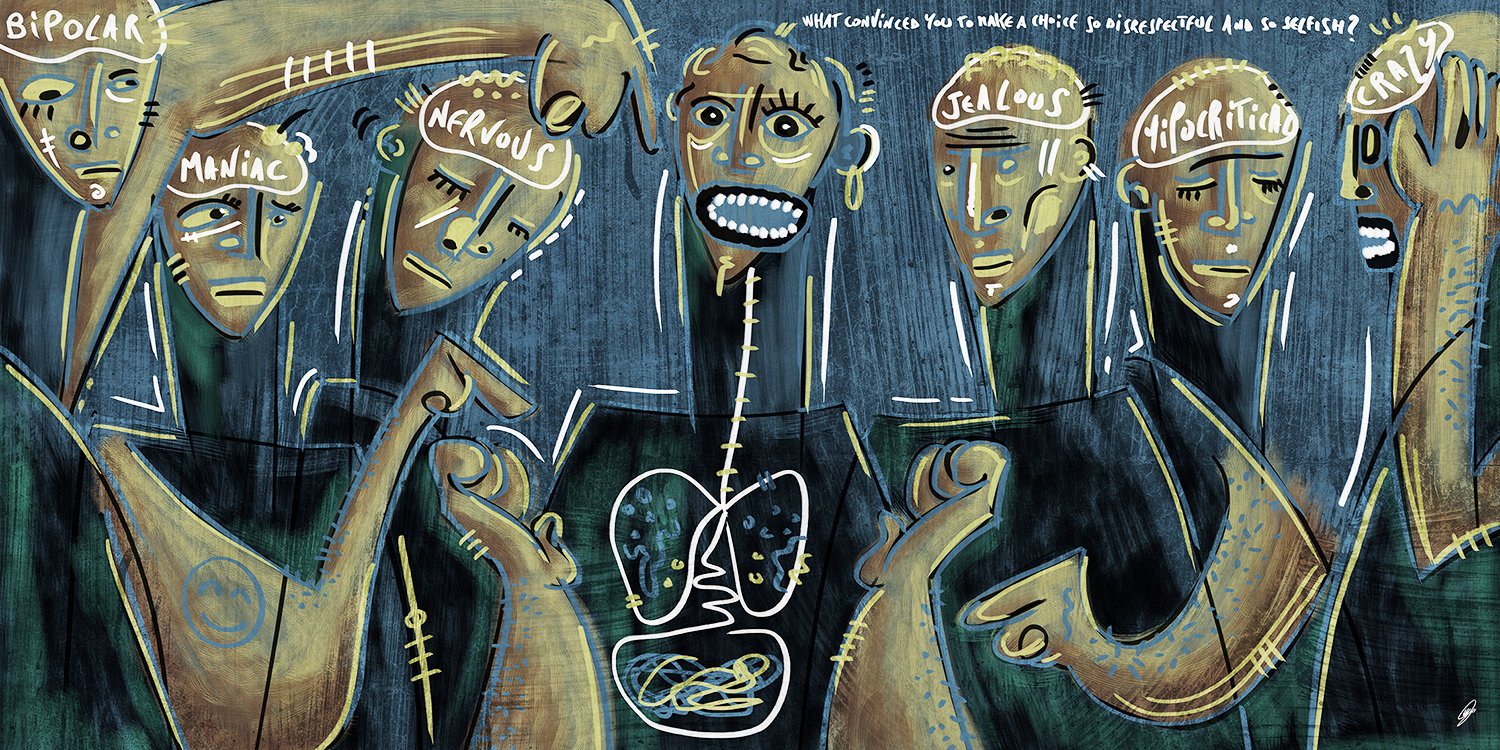
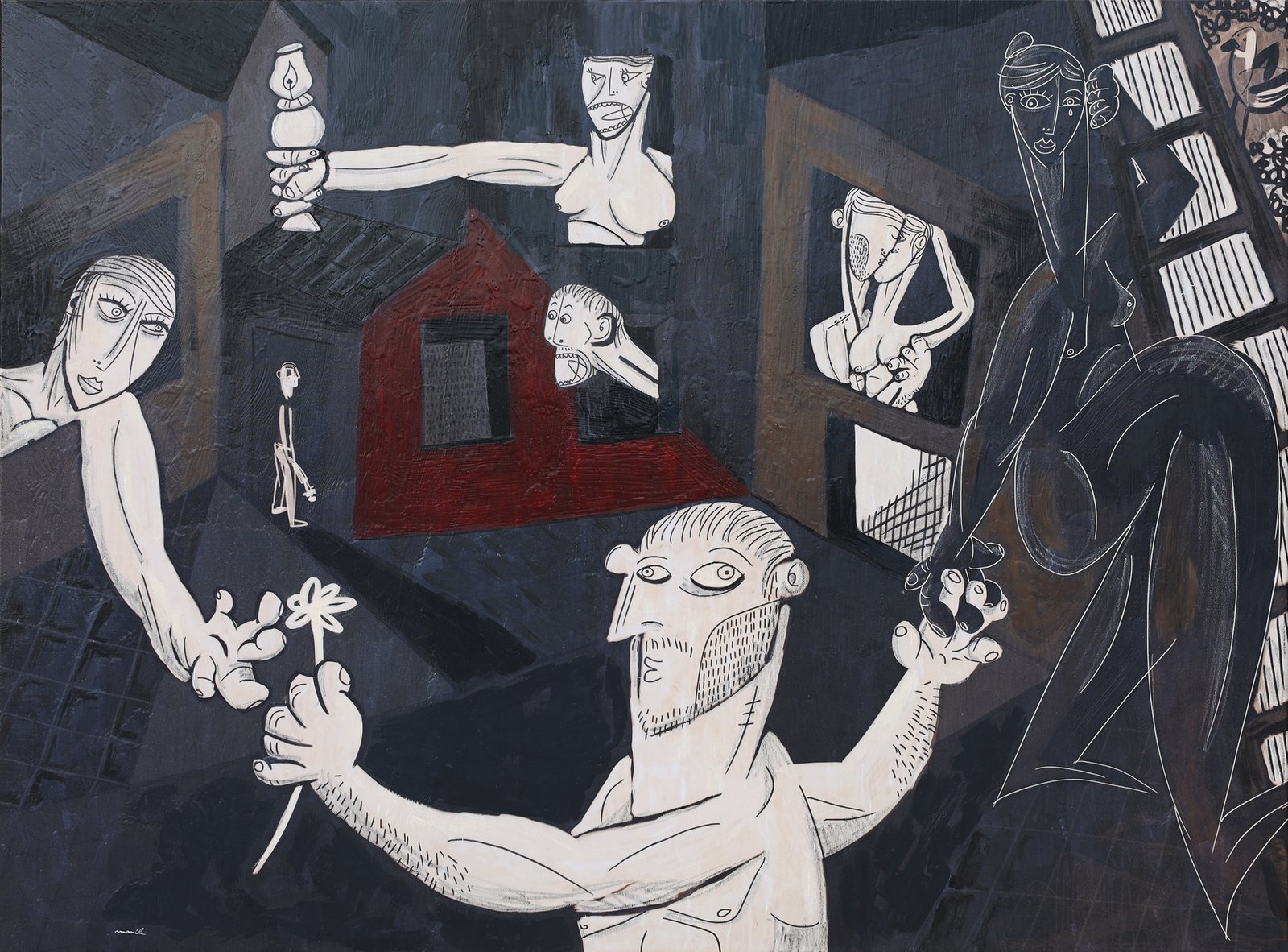
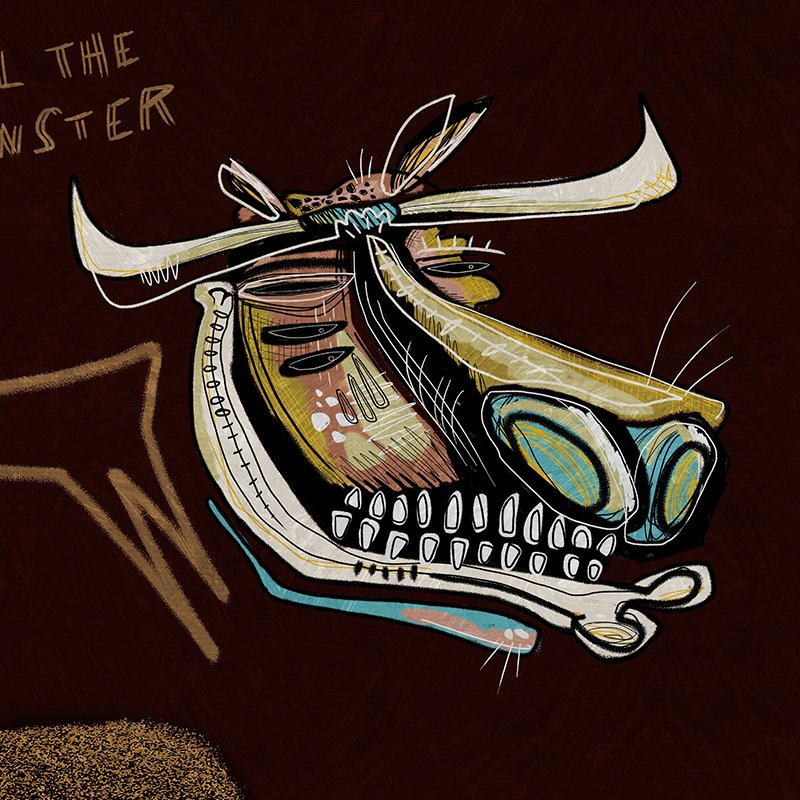
For Giuseppe Monile, painting is not an act of decoration, but a surgical operation on the psyche. The canvas does not reveal creatures from distant folklore or nightmares born of a fictional fantasy; what emerges is the reflection of an unspoken intimacy. Monile’s "Monster" is not the 'other,' the outsider, or the stranger: the monster is us.
In his works, the artist gives shape to that part of the self we typically relegate to the blind spots of our consciousness. It is our most intimate and brutal nature-the part we do not love, which we painstakingly attempt to tame beneath the veil of social convention.
The painterly gesture thus becomes an act of radical acceptance. To depict the monster is to admit the existence of a shadow zone where words fail, leaving only instinct, impulse, and the raw nakedness of being.
“I do not paint to frighten the viewer, but to invite them to recognize themselves. In every brushstroke that distorts a face or exaggerates a body, there is an attempt to embrace the ugliness that makes us profoundly, painfully human.”
To look at a work by Giuseppe Monile is an invitation to stop fearing our wild nature and begin to understand it. The monster, finally unleashed upon the canvas, ceases to be an enemy and becomes a traveling companion: visual proof that, in order to be whole, we must have the courage to gaze into the darkness and, paradoxically, find our truest light within it.
The Skull: The Aesthetics of Failure
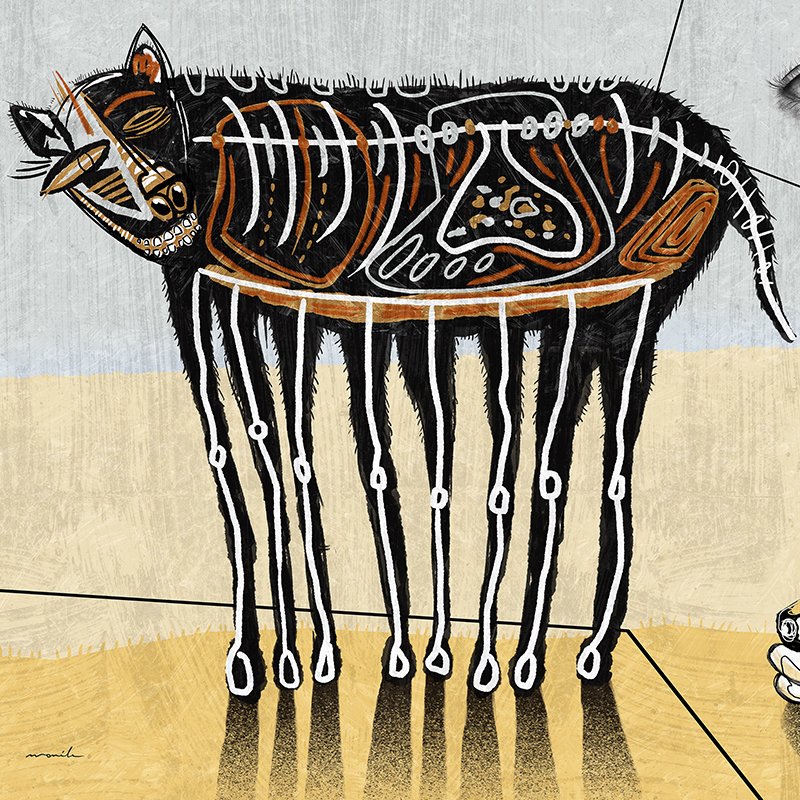
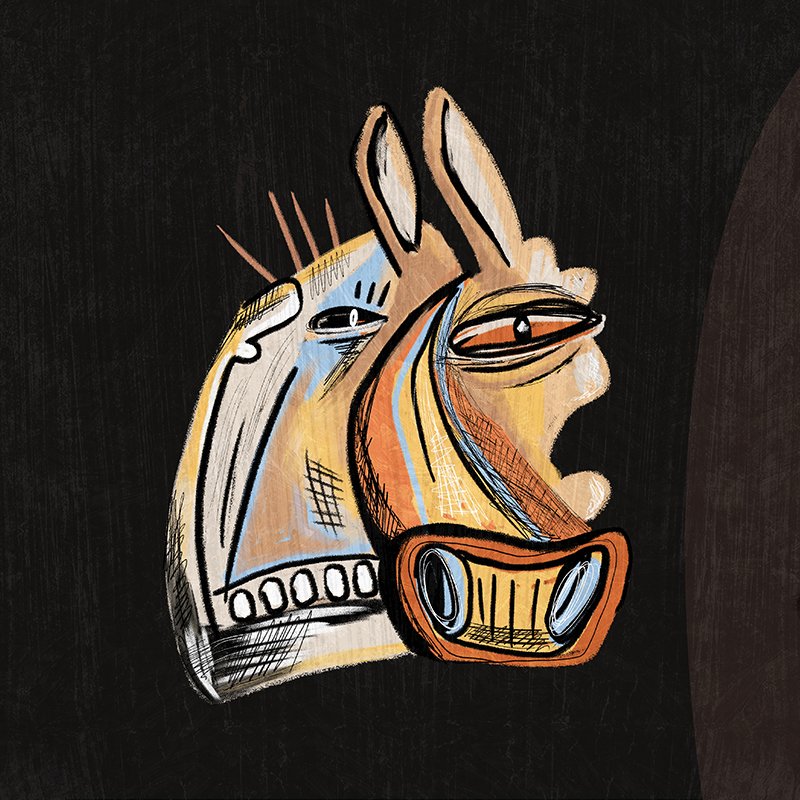
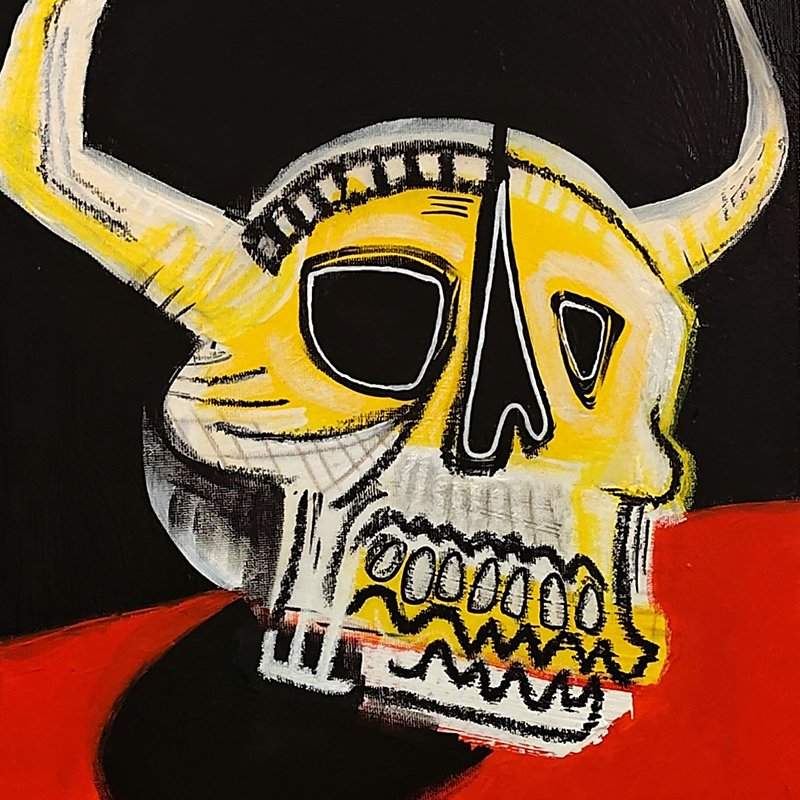
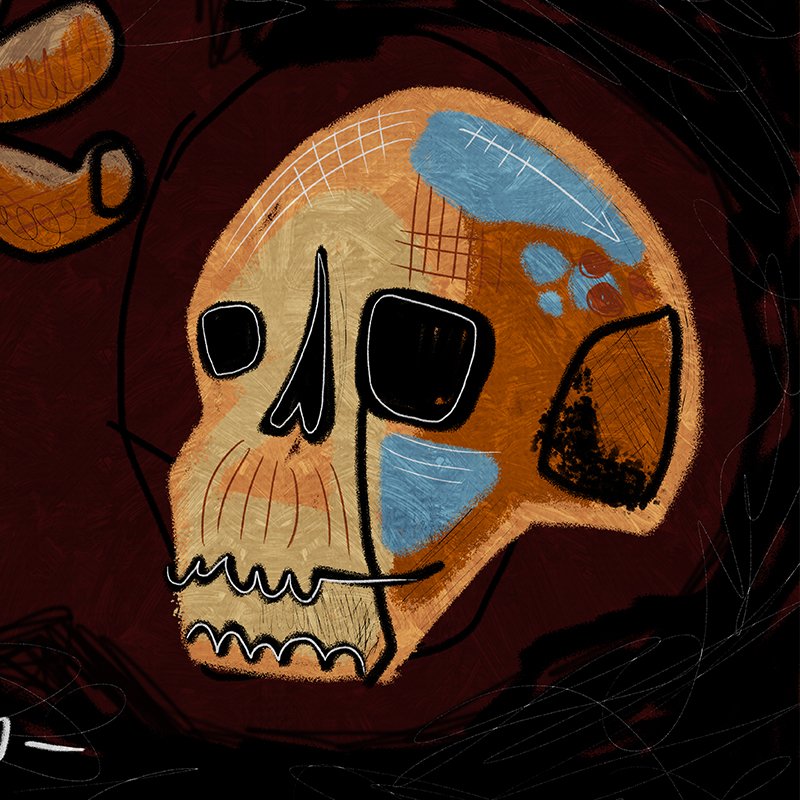
In Giuseppe Monile's artistic exploration, the skull strips the human being of every aesthetic artifice to reveal its barest and most vulnerable structure. It is not a traditional memento mori, but rather a radical psychological portrait: the skull does not represent death, but humanity at the point of its ultimate exhaustion.
Every skull painted by Monile bears the marks of an erosion that is not biological, but spiritual. It is bone worn away by an incessant thought, by that gnawing obsession that burrows through consciousness until it is entirely hollowed out. The artist observes and translates onto the canvas the aftermath of a traumatic event or an unresolved conflict.
For Monile, the skull is the supreme symbol of failure. In a society that demands success at all costs, the artist chooses to celebrate surrender. To depict failure through the image of the skull is not an act of nihilism, but one of profound compassion. It is the acknowledgment that we are also shaped by what we failed to become, by our shattered plans and the wounds that never truly healed.
“The skull represents the story of a collapsed resistance. I do not seek the perfection of form, but the truth of the fracture: that exact point where a thought becomes too heavy to bear, and a person transforms into their own absence.”
The artwork thus becomes a mirror in which the viewer is invited to recognize their own "erosion." Looking at these figures, we do not feel terror, but a melancholic kinship: we are all walking skulls, each bearing, carved into our very bones, the mark of the thought that is consuming us. It is an invitation to stop hiding our own ruins and to find, within the bareness of failure, a new and authentic dignity.
The Eye between Confession and Sentence
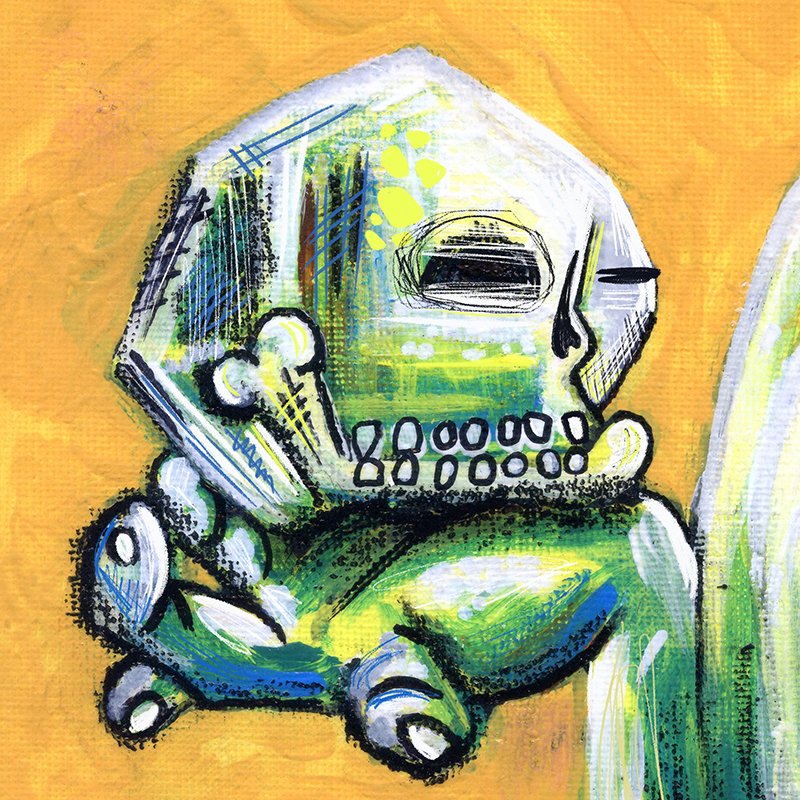
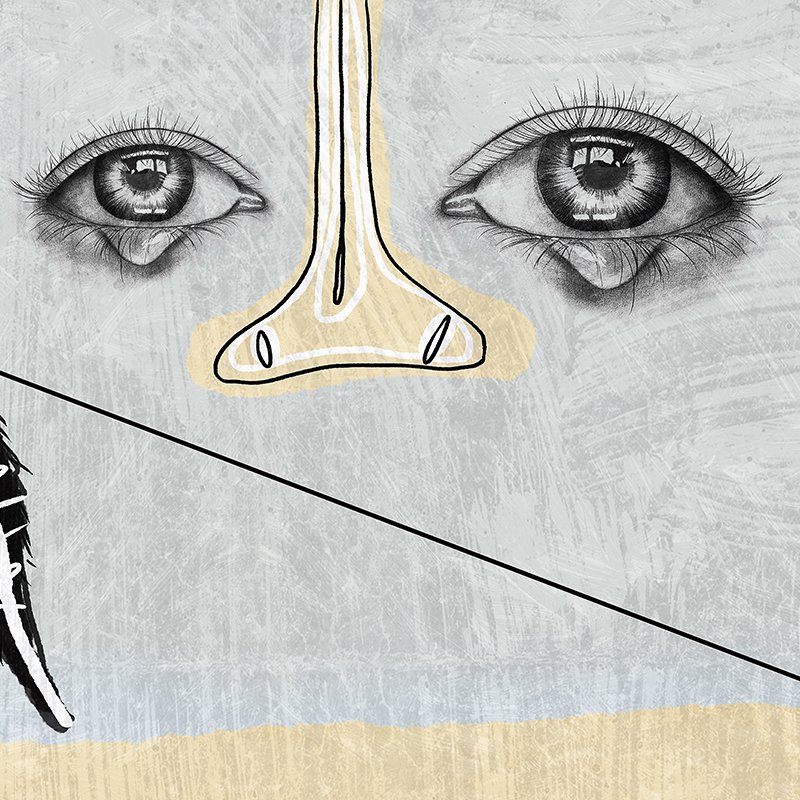
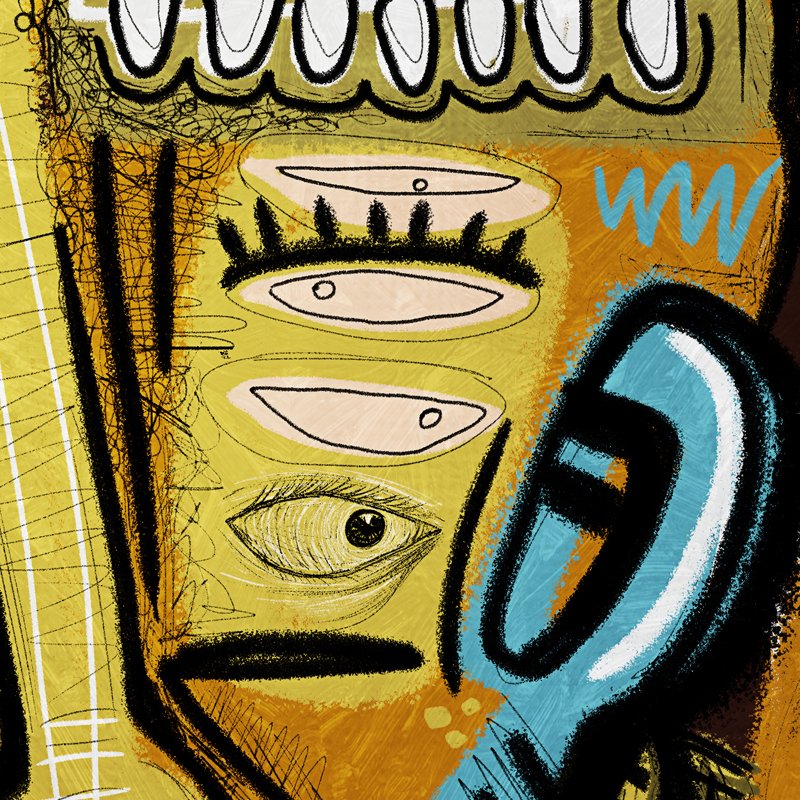
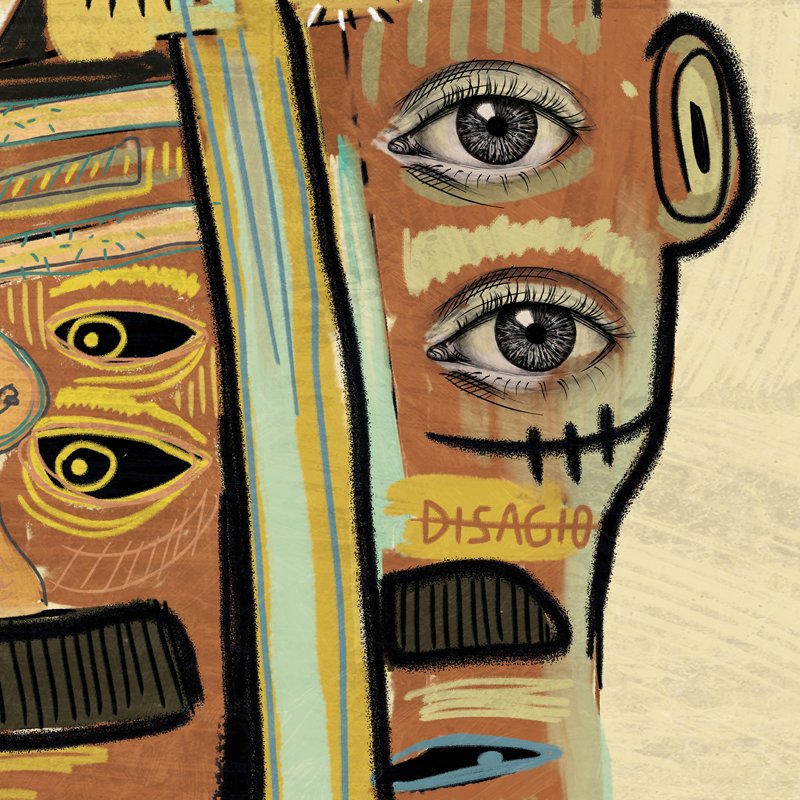
In the canvases of Giuseppe Monile, the eye is never a mere anatomical detail, but a gravitational center that attracts and repels. It is the recurring element that transforms the artwork from an object to be observed into a subject that observes.
In one facet of his production, the artist uses the gaze as an open wound upon the psyche. Here, the eye is the gateway through which the deepest emotions flow: fear, unexpressed desire, the melancholy of the monster within us. In these works, painting an eye means translating the invisible into the visible, giving chromatic form to that tangle of sensations we cannot name.
There is, however, another dimension to the gaze in Monile’s work: the external eye. Multiplied, omnipresent, sometimes deformed, these gazes represent social pressure, the weight of comparison, the judgment that hounds us. It is the paranoia of the visible: the sensation of being constantly under the magnifying glass of the world, unable to hide our own fractures.
“The eyes in my works are the treasure chest of the strongest emotions. In my works, I search for that breaking point where the gaze stops looking and starts feeling.”
Here, the artist stages the eternal conflict between who we are and how we are perceived. The viewer is no longer just an outside observer, but becomes part of the oppression: by looking at the artwork, they realize that they are, themselves, the judging gaze.
Artistic Research
Giuseppe Monile's artistic research takes the form of a bridge stretched between the archaic and the urban, an intense dialogue where primitive synthesis meets the urgency of the street. His work does not seek representation, but rather the evocation of states of mind through a visual language that is, simultaneously, instinctive and cultured.
Monile’s aesthetics are the result of a layered heritage. It is not a mere exercise in style, but a necessity of language:
From African art, the artist borrows the power of the mask and its plastic synthesis. This influence merges with the lessons of Picasso's Cubism, leading to the deconstruction of the face and body. The figure is fragmented not to be destroyed, but to be analyzed from multiple emotional perspectives simultaneously.
His past experience with graffiti infuses the canvases with a nervous vitality. The nod to Jean-Michel Basquiat is evident in the scratching strokes, the sometimes hinted-at text, and that raw nobility that transforms the "marginal" into the sacred. The artwork becomes an interior wall upon which the artist carves his own demons.
Despite the complexity of his influences, Monile’s research arrives at a conceptual minimalism. The artist strips the scene of the superfluous to focus on a few highly powerful symbols: the monster, the skull, the eye. These elements are not mere decorations, but archetypes of the inner self. The choice to subtract detail serves to leave room for the void—that void into which the viewer is forced to project themselves. It is an economy of the sign that aims straight at the heart of human conflict.
One of the most disturbing and fascinating aspects of Monile’s painting is his use of color, often choosing a strong, vibrant, and contrasting palette. This contrast creates an emotional short circuit: the beauty of the color makes the horror of the monster tolerable, compelling the viewer to stay, to not look away, to process the suffering through the energy of light. This synthesis of influences makes Giuseppe Monile's work unique: a painting that "screams" with the colors of joy and "thinks" with the depth of the abyss.